
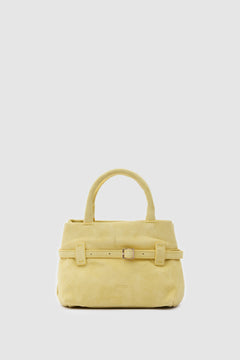
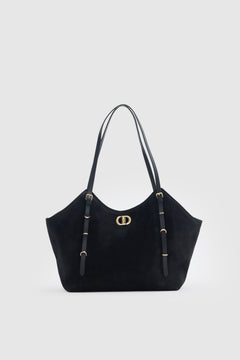
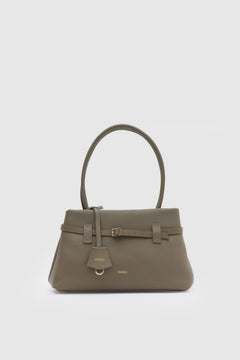
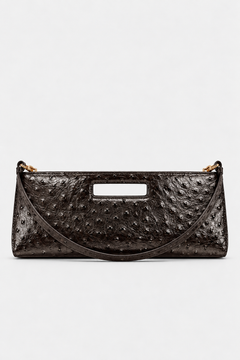


Things to Consider When Buying a Bag: A 10-Criterion Quality Control Guide
In Turkey, the clothing, footwear, and bag categories constitute the most preferred segment in online shopping, accounting for 39.6% of the market. However, the return rate in this category reaches 30-40%. The reason is simple: buyers cannot make the right choice. A bag that looks good in a store or on screen might have its zipper break, strap snap, or stitching come undone just two weeks later.
The list of things to consider when buying a bag is long; however, this guide condenses the subject into 10 concrete criteria. It offers a perspective not only on "what to look for" but also "how to test it." Whether you pick it up in a store or order it online — this checklist works in both scenarios.
Table of Contents
- 1. Clarify the Purpose of Use
- 2. Perform a Material Test
- 3. Check Stitching Quality
- 4. Don't Neglect the Zipper Test
- 5. Examine the Lining
- 6. Test Strap Width and Durability
- 7. Choose Bag Size According to Your Body
- 8. Evaluate Internal Compartments and Organization
- 9. Perform a Weight Test
- 10. Question the Price-Quality Balance
- Conclusion: A Summary Checklist of 10 Criteria
- Frequently Asked Questions
1. Clarify the Purpose of Use: First Need, Then Aesthetics {#kullanim-amacini-netlestirin}
Among the things to consider when buying a bag, the purpose of use comes first. Most people decide based on appearance — yet the question "how to choose a bag" always begins with a needs analysis. Everyday use, office, special occasion, and travel bags require completely different features.
For an everyday use bag, lightness and easy access are paramount. Crossbody or medium-sized shoulder bags are the most practical options for this category. An office bag requires a laptop compartment, a vertical stance, and a professional appearance. A special occasion bag should be compact; enough space for a phone, lipstick, and cards is sufficient. A travel bag, on the other hand, demands large volume, water resistance, and secure zippered compartments.
Carrying the same bag to both the office and dinner creates a half-hearted experience in both. First determine your purpose, then move on to the other 9 criteria.
2. Perform a Material Test: Real Leather, Faux Leather, Canvas Differences {#malzeme-testini-yapin}
Material directly determines the lifespan of a bag and is the most critical factor among things to consider when buying a bag. When choosing a leather bag, correctly identify the material type — this information makes the difference between years of satisfaction and regret after a few months.
Full grain leather bags last 10-30 years with regular care. The natural texture of the leather develops a beautiful patina over time. Although top grain leather's surface is lightly sanded, we can easily say it lasts 5-10 years. Faux leather (PU/PVC), however, cracks and peels after an average of 1-3 years; there's no turning back.
3 Practical Tests You Can Apply in a Store
- Press test: Press the bag's surface with your fingertip and release. Real leather quickly returns to its original shape; faux leather leaves a mark or recovers slowly.
- Smell test: Natural leather has a characteristic, slightly earthy scent. Faux leather, on the other hand, smells distinctly chemical or plastic.
- Edge test: Look at the cut edges of the bag. In real leather, you will see a fibrous texture; in faux leather, there is a smooth, plastic surface.
Canvas and nylon bags are also a sturdy alternative for everyday use. They offer advantages of lightness, washability, and affordability. However, if you are looking for a long-term investment, real leather is still the most efficient option in terms of cost-to-lifespan ratio.
3. Check Stitching Quality: The Bag's DNA {#dikis-kalitesini-kontrol-edin}
The true quality of a bag lies in its stitching. No matter how good the material, poor stitching nullifies everything. A quality manufacturer will sew stitches evenly spaced, tight, and neat.
Checkpoints:
- Stitch spacing: The distance between stitches should be even. Irregular spacing indicates a lack of quality control in mass production.
- Thread quality: Waxed polyester thread is the most durable option. Cotton thread rots and breaks over time.
- Corner stitches: Look for reinforced (double row) stitching in corner and edge areas. These points are subjected to the most tension.
- Lock stitch: Every stitch should have a lock at the end. Without a lock, if one thread breaks, the entire row can unravel.
Practical test: Gently pull on the bag's strap attachment point. If the stitching opens or you feel looseness, that bag will not withstand daily use. This single test reveals more about the bag's manufacturing quality than most other details.
4. Don't Neglect the Zipper Test: The YKK Difference {#fermuar-testini-ihmal-etmeyin}
The zipper is the most used and most frequently malfunctioning part of a bag. A zipper you open and close an average of 5-10 times a day reaches thousands of cycles annually. To those asking "how to tell the quality of a bag," the shortest answer is: look at its zipper.
YKK is a Japanese brand that supplies approximately 90% of the world's zipper production. Bags with YKK zippers generally operate more smoothly and offer a longer lifespan. Seeing "YKK" on the zipper proves that the manufacturer prioritizes quality even in accessories.
Zipper Quality Test (30 Seconds in Store)
- Open and close the zipper completely 3-5 times. If there is snagging, forcing, or noise, it is low quality.
- Examine the zipper teeth. The teeth should be neatly aligned and tight; gaps or crookedness indicate poor manufacturing.
- Metal zippers are generally more durable than plastic. However, high-quality nylon zippers (especially YKK-made) also offer long-lasting performance.
- Look at the zipper slider. If it feels loose or wobbly, there's a high risk of it breaking down quickly.
You cannot perform a zipper test, especially when shopping online. Therefore, prefer sellers who specify the zipper brand in the product descriptions. Clearly stating brands like YKK or RIRI offers transparency and quality assurance.
5. Examine the Lining: The Unseen Indicator of Quality {#astari-inceleyin}
Most buyers evaluate the outside of the bag and ignore the inside. However, the lining is the most honest indicator of how much the manufacturer truly cares about quality. The outside is the display window, the inside is the kitchen. Lining inspection is often overlooked in most guides on what to consider when buying a bag — don't you miss it.
Qualities of good lining:
- Polyester satin or cotton woven lining is durable and resists tearing.
- A manufacturer who finishes the edges of the fabric with overlock or bias binding shows attention to detail. Raw edges will fray over time.
- Water-resistant lining offers extra assurance to protect your belongings inside.
- Light-colored lining makes it easier to find items inside the bag; dark lining makes it harder to locate small items.
Bad signs: Adhesive lining (bonding) will quickly bubble and separate. Thin, paper-like lining can tear on first use. Irregular lining stitches indicate that the manufacturer has neglected internal quality.
The lining detail is the "secret signature" of quality bag manufacturers. A manufacturer who cares about the lining also cares about other details you don't see.
6. Test Strap Width and Durability {#aski-genisligini-test-edin}
The strap is the only point of contact connecting the bag to your body. A thin and stiff strap can cause shoulder pain within 30 minutes. Orthopedic specialists recommend that bag weight should not exceed 10% of body weight — strap design directly affects the distribution of this load.
Checkpoints:
- Strap width: A minimum of 2 cm width improves weight distribution. Straps less than 1 cm will dig into your shoulder.
- Strap-body connection: This is the most worn point of the bag. Metal ring or rivet connections surpass stitching connections in durability.
- Adjustability: Being able to adjust the strap length provides flexibility for different outfits and use scenarios (crossbody vs. shoulder).
- Strap material: Leather straps soften and mold over time. Chain straps are aesthetic but heavy and cold. Woven straps are the lightest option.
Practical test: Hang the bag on your shoulder and walk for 2-3 minutes. If the strap slides, digs into your shoulder, or the bag sways, you will have problems with daily use. Doing this test in the store is much easier than dealing with a return process.
7. Choose Bag Size According to Your Body {#canta-boyutunu-secin}
Choosing the wrong size distorts visual proportion and reduces practicality. Bag size is directly related to your height and body proportions. Among the things to consider when buying a bag, size control is the most overlooked criterion, especially in online shopping.
Height-bag size guide:
- Under 160 cm: Small to medium-sized bags (20-30 cm height) are the most harmonious proportion. Large tote bags can overwhelm the body.
- 160-170 cm: Medium-sized bags (25-35 cm) provide an ideal proportion. Both small and large models can be carried comfortably.
- Over 170 cm: Large bags (35 cm+) appear proportionate. Very small bags can feel lost.
Size control for online shopping: Mark the specified cm measurements on your desk with a ruler. Evaluate the width × height × depth trio together. Height alone can be misleading; a bag 30 cm high but 8 cm deep may turn out thinner than you imagine.
For detailed information on bag-body compatibility, you can check our article Bag Selection Guide by Body Type.
8. Evaluate Internal Compartments and Organization {#ic-bolmeleri-degerlendirin}
The true usability of a bag emerges in its interior design. A deep, single-compartment bag turns into a black hole where everything gets mixed up. A well-designed compartment system saves minutes in daily life.
Essential compartments:
- Main compartment: Sufficient width for a wallet, makeup bag, and daily essentials.
- Internal zippered pocket: A secure space for your phone and valuables. A bag without a zipper poses a security risk in crowded places.
- Front or back pocket: For items requiring quick access, like a public transport card or keys.
- Laptop/tablet compartment (in an office bag): Should be a separate, softly lined compartment. Carrying a laptop in the main compartment can damage both the device and the bag.
If you're looking for additional tips on bag organization, we've prepared a separate article, the bag organization guide.
9. Perform a Weight Test: Even an Empty Bag Matters {#agirlik-testini-yapin}
Check the bag's own weight before putting anything in it. A bag that feels heavy when empty will create significant pressure on your shoulders and back when full. The American Chiropractic Association recommends that bag weight should not exceed 10% of body weight.
Reference weights:
- Ideal daily bag: 400-700 grams (empty)
- Acceptable: 700-900 grams
- Risky: Over 900 grams — after adding contents, it reaches 2-3 kg and can lead to shoulder, neck, and back pain with long-term carrying.
Lightness does not mean low quality. Modern manufacturing techniques make it possible to create durable yet lightweight bags. With smart design and proper material selection, a bag can drop below 500 grams — without compromising durability.
Online shopping tip: Question bags that do not list weight information on the product page. Manufacturers who do not share weight usually know they are not at an advantage in this regard. Transparent manufacturers clearly state weight information in grams.
10. Question the Price-Quality Balance: Cheap Can Be Expensive {#fiyat-kalite-dengesini-sorgulayin}
The last and perhaps most strategic item on the list of things to consider when buying a bag: look not at the price tag, but at the annual cost. This simple calculation allows you to make the most rational decision when choosing a bag.
Annual cost comparison:
- 500 TL faux leather bag × 1.5 year lifespan = ~333 TL per year
- 2,000 TL genuine leather bag × 10 year lifespan = 200 TL per year
- 3,500 TL full grain leather bag × 20 year lifespan = 175 TL per year
The numbers clearly show: allocating a higher budget initially is a more economical decision in the long run. This "investment bag" approach protects both your wallet and the environment — instead of buying a new bag every year, you continue with a single quality bag for years.
Caution: A high price does not always guarantee high quality. Apply the 9 criteria in this guide to test the real value behind the price. Brand premium, marketing budget, or import costs can inflate the price. What's important is that concrete quality indicators are proportionate to the price.
Conclusion: A Summary Checklist of 10 Criteria {#sonuc}
We have summarized what to consider when buying a bag into 10 criteria. You can use this checklist for both in-store and online shopping:
- ✅ Determine your purpose of use (daily, office, special occasion, travel)
- ✅ Perform a material test (press, smell, edge inspection)
- ✅ Check stitching quality (even spacing, lock stitch, corner reinforcement)
- ✅ Test the zipper by opening and closing it 3-5 times
- ✅ Examine the quality and cleanliness of the lining
- ✅ Check strap width and attachment point
- ✅ Evaluate the size's proportion to your body
- ✅ Check the number of internal compartments and organization
- ✅ Weigh the empty bag (ideal: 500-800 grams)
- ✅ Calculate the annual cost (price ÷ estimated lifespan)
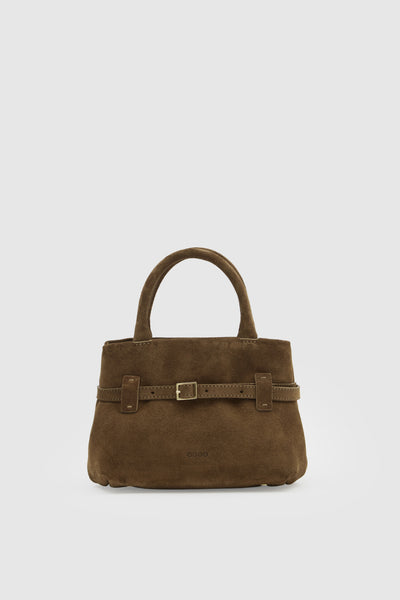
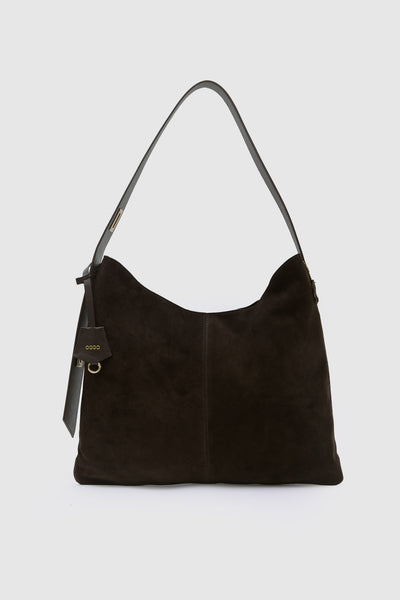
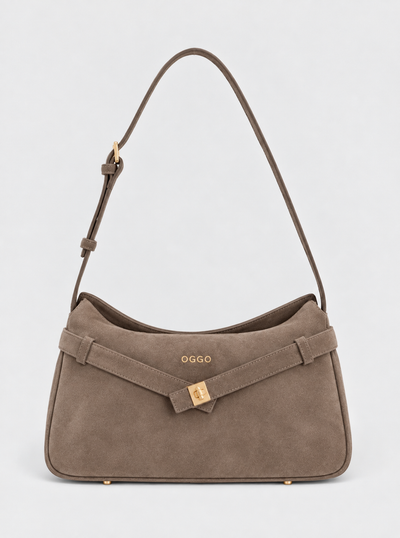
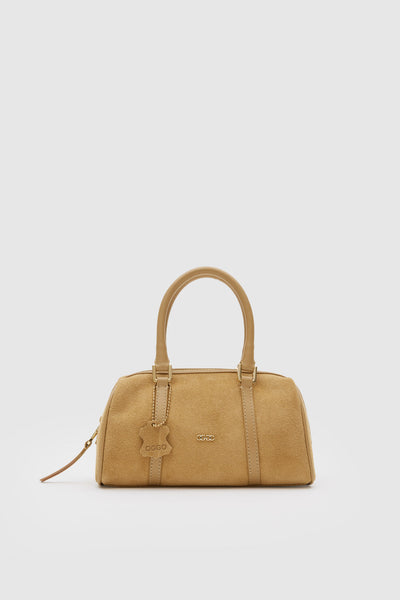
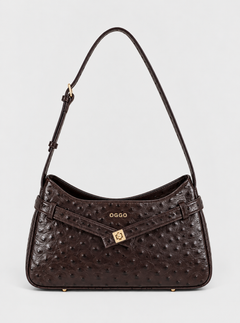
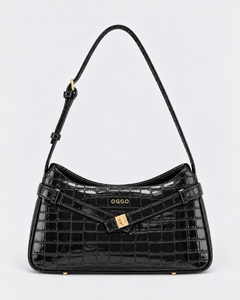
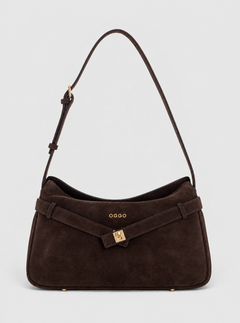
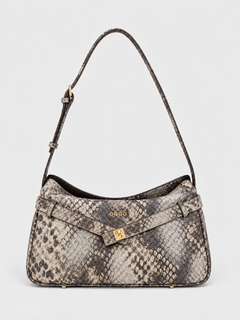
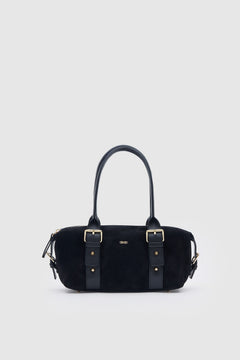
For bags that meet these criteria, explore OGGO collections. Designed with genuine leather, YKK zippers, reinforced stitching, and weighing under 500 grams, these models are produced to meet every criterion in this guide.
Frequently Asked Questions {#faq}
What should be checked first when buying a bag?
First, determine your purpose of use, then check the material quality and stitching craftsmanship. These three criteria directly determine the bag's lifespan and your satisfaction.
How to distinguish a genuine leather bag from fake leather?
Press it with your fingertip and release; genuine leather quickly returns to its original shape. Also, natural leather has a slight, characteristic scent, while faux leather smells chemical. The presence of a fibrous texture on the cut edges is also an indicator of genuine leather.
How do I understand the size when buying a bag online?
Mark the cm measurements from the product page on your table with a ruler. Consider the width × height × depth together. Height alone can be misleading; the depth measurement helps you understand the bag's true volume.
How heavy should a bag be?
The empty weight of the bag should ideally be between 500-800 grams. When you put your daily items inside, the total weight should not exceed 10% of your body weight. An empty weight above 900 grams can lead to shoulder pain during prolonged carrying.
How many years does a quality leather bag last?
A full-grain leather bag can last 10-30 years with regular care. Top-grain leather lasts 5-10 years, and artificial leather has a lifespan of 1-3 years. Regular moisturizing, proper storage, and avoiding overloading directly extend the life of the bag.